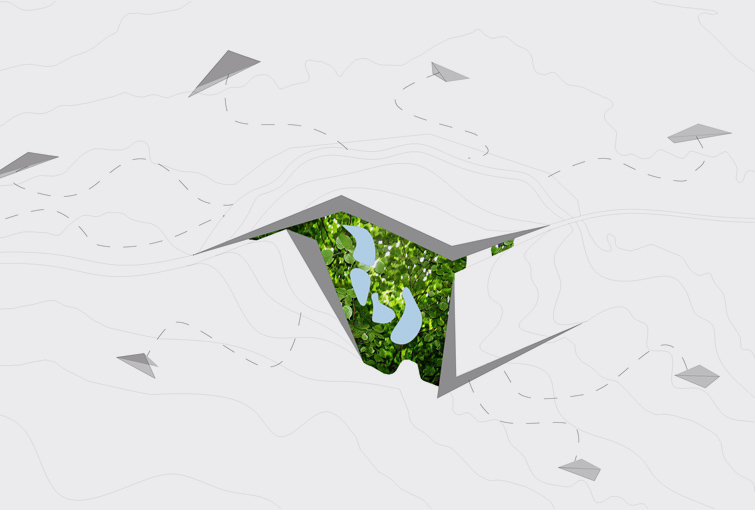
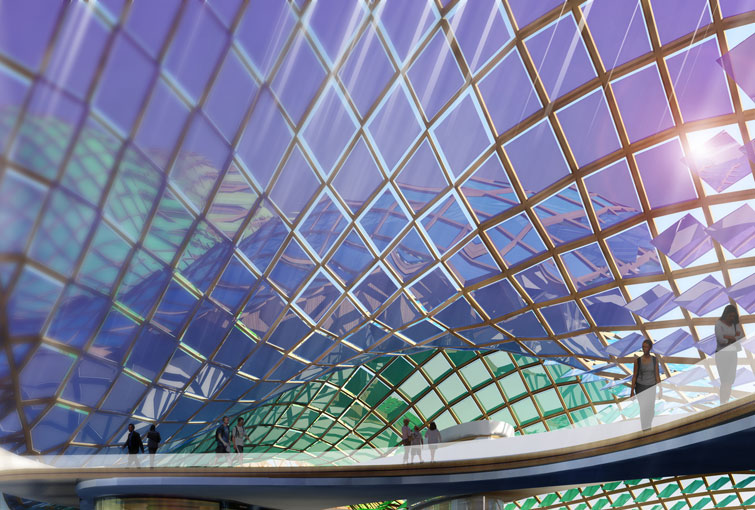
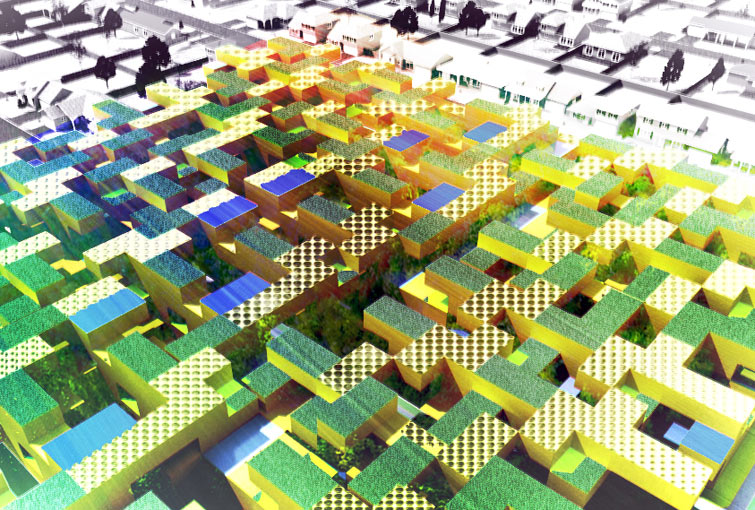
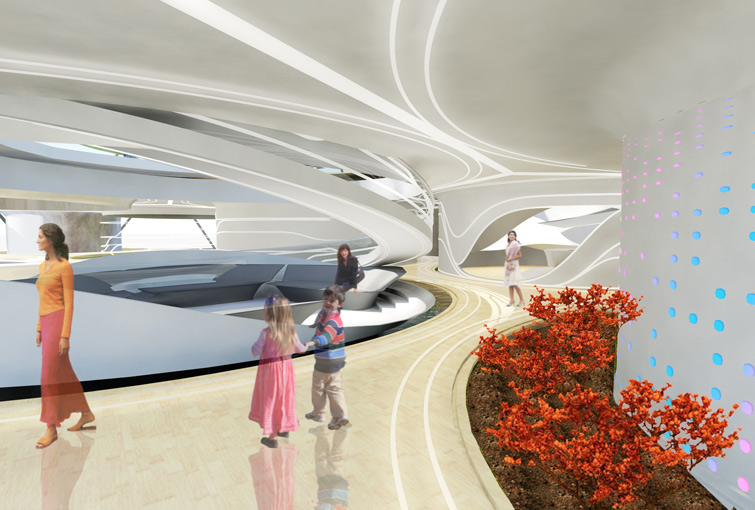
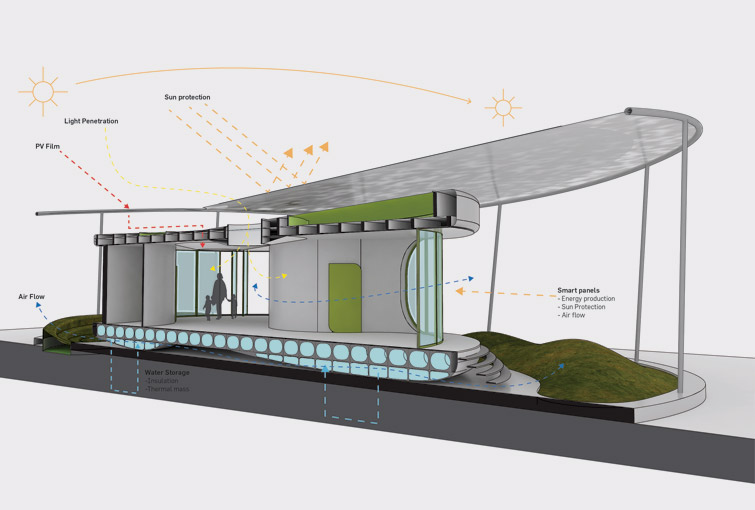
This proposed development included cutting edge technologies, design strategies to maximise sustainable performance and increased public access to the foreshore.
Read moreA ‘diamond’ design concept was translated into a series of stacked diagonally articulated modules of eight floors each for the Corniche Tower. The colourful façade of interlocking triangles was the outcome of research to determine the optimum surface and material effects associated with the brilliance of diamonds. Different weather situations during night and day are reflected in the building, keeping the external aesthetics animated and responsive when viewed from the public domain. The Corniche would be immediately recognisable due to its lighting design, both externally and internally.
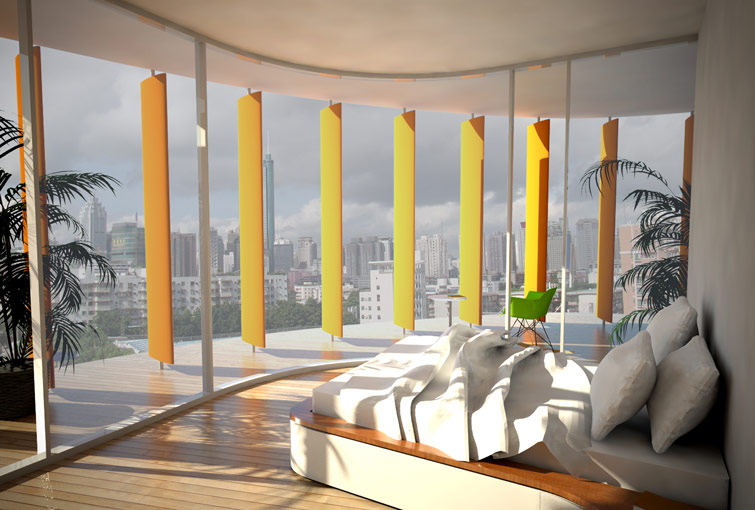
Read moreEfficient in energy consumption, this innovative office concept is based on the findings of the research project, Office 21 by the Fraunhofer Institute. The building is divided both horizontally and vertically and interconnected via an atrium - the central communications heart of the project. An adaptive façade system allows light control, shading and energy optimisation and consists of movable circular discs with integrated photovoltaic elements
Read moreLangfang City is a major regional hub of international trade and information exchange with a planned high-speed rail system and large-scale trade, retail, and residential and commercial development.
Read moreThe design concept for the new architecture faculty building in Stuttgart was developed from a set of devised algorithms. The proposal was based on a series of three-dimensional spaces that provides a close interlocking of structure, voids and other various functions.
Read moreThe oasis is a place of vitality, shelter, gathering and natural beauty and is the inspiring theme for the concept design of the court of a presidential palace. The Liwa oasis is the place of birth of the ruling families of Abu Dhabi and Dubai and is referenced in this court design.
Read moreVisitors to the computer-generated pavilion experienced a surreal, luminous green environment, which explored the relationship between the natural and the artificial within design, art and architecture for POL Oxygen magazine. More than 100 cubic metres of space was created with only 10kg of material, using a “minimal surface”.
Read moreA house made from fully recycled P.E.T.
Read moreThe bar design for the AIA at Designex was conceived as a "facade mock-up" of Tower Skin, the innovative and award-winning "Re-skinning" of the UTS Tower in Sydney. It showcased new technologies in outdoor membrane facades and incorporated new lighting concepts. Attached to a building with minimal intervention, the membrane shape followed the flow of forces within geometry.
Read moreThe MTV Music Award stage was a digital design, derived from nature, realised in lightweight fabric, using the latest digital fabrication and engineering techniques, to create more with less. It comprised of 108m3 of space enclosed within a minimal surface area of 568m2 and used only 113kgs of lightweight material. Graphic Designer TOKO and programmer/animator Robyn Pyon developed graphics, which were projected for each musical performance.
Read more